
When we were in Paris we started looking at our options for southern Spain, on our list was Granada and visiting the Alhambra but there were no tickets available until late November, so we needed to find somewhere else to explore and settled on Almería.
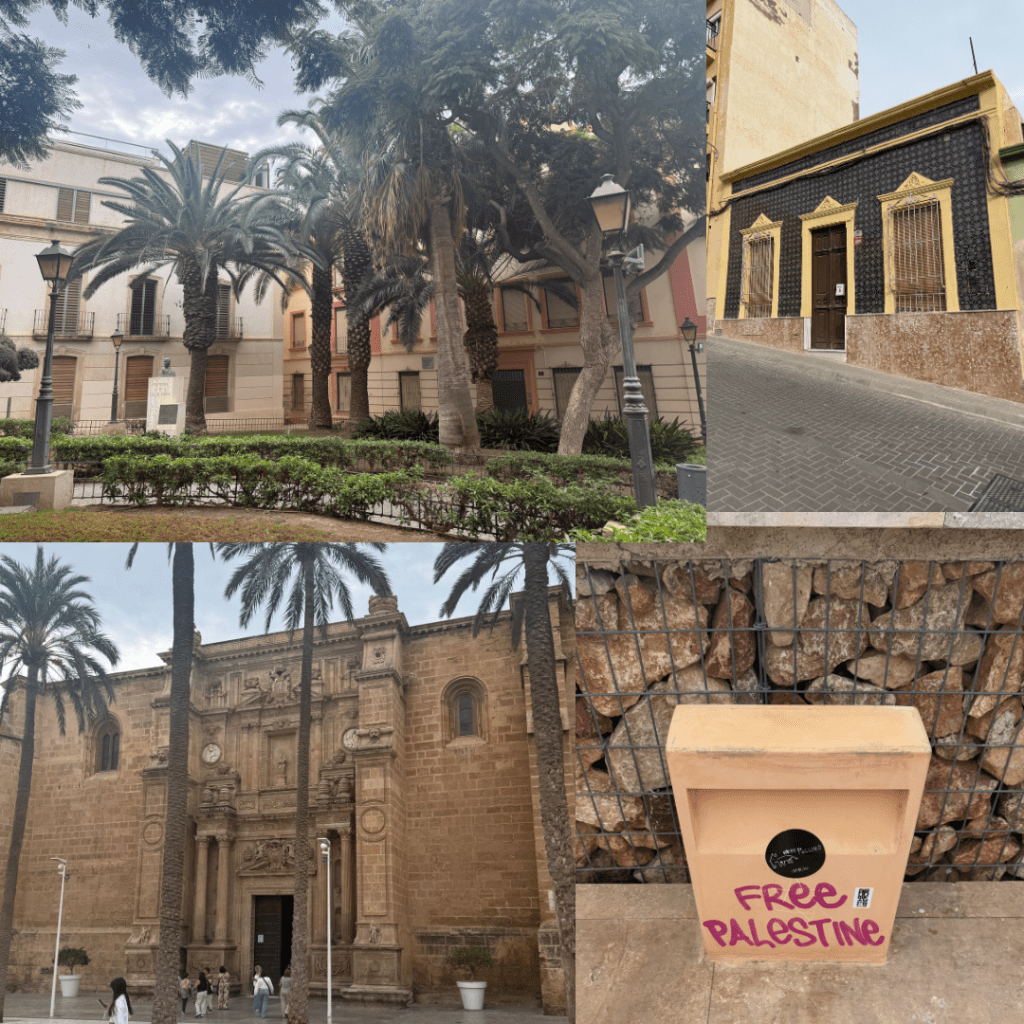
Almería is a small isolated city which has had both a prosperous and a difficult past changing controllers many times which means it has fascinating architecture – Roman, Moorish, Christian, British – and others who have conquered, used the place for it’s resources or vantage point and then been taken over by the next group.

As we drove in on the bus we passed thousands of farms which are all entirely covered in plastic “greenhouses” where grapes, watermelon, berries and other crops are grown. It is impossible to describe them as the concept is similar to grow houses at home but the materials used here are very different and the sheer size of these huge paddocks of covered growing is inconceivable.
There was a haze while we were there but apparently on a clear day you can see Africa quite clearly. It also almost never rains there, on average 15 days per annum get some rain so their water is all from desalination. As we left Almería a few days later the first area we travelled through was the desert – the only desert in Europe – which also helps explain the heat, up to 50C in the summer! and for us it dropped to 25C overnight and was 27-30C during the day.

Our apartment here was absolutely brilliant, brand new with wonderful kitchen, a huge loft bedroom and bathroom, downstairs loo and living space. From our bedroom we had a projector and luckily the last person left Netflix logged in so we could watch some movies and Bridgeton over the 3 nights we stayed there.
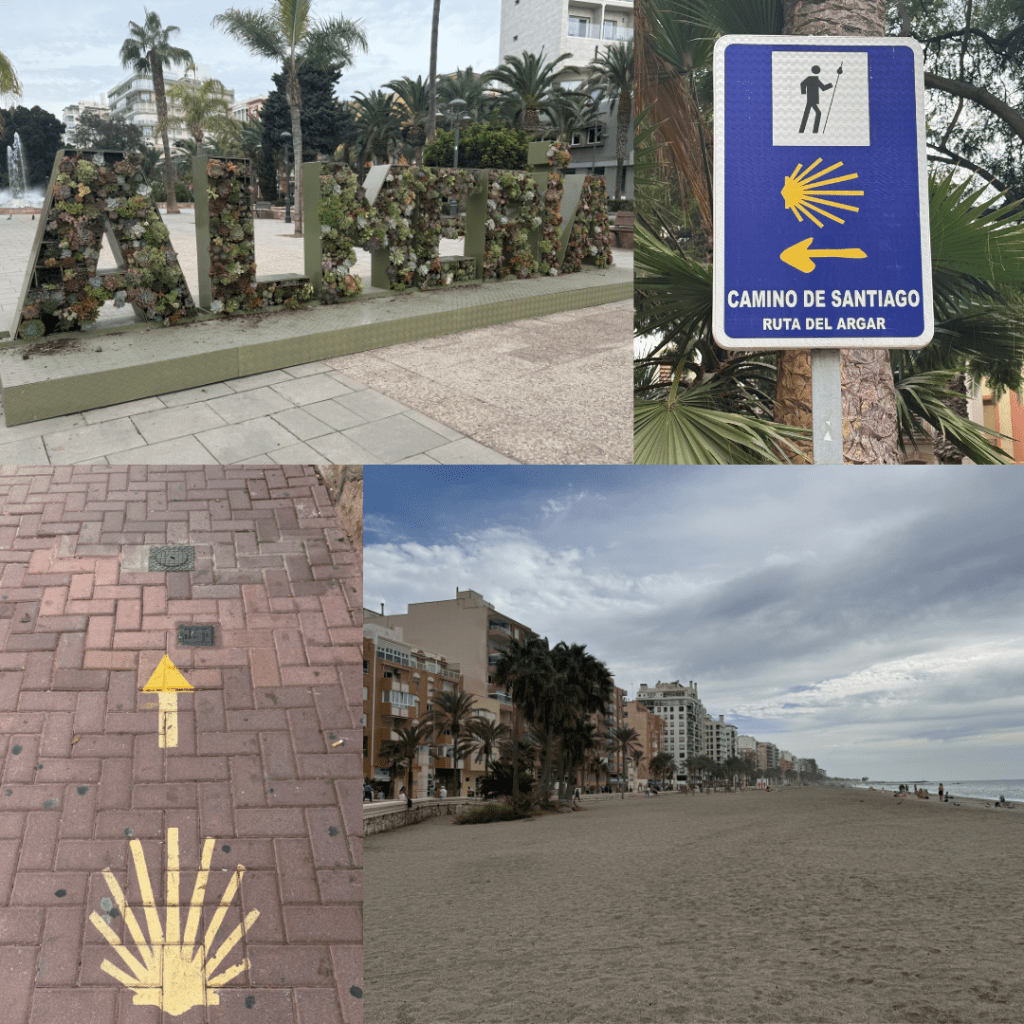
The apartment was also perfectly located, about 20 mins walk from the bus station in a lovely shopping street. I would generally say that Almería is not a wealthy city but the area we were staying in was probably the most affluent. The city is all low rise buildings, has long promenades and large gardens – again in complete contrast with the completely arid landscape all around. Also about 20 mins walk was the first of many beaches, 4km long with a pedestrian promenade all the way. On the Sunday morning when we walked the length of the beach it was heaving with people, beach volleyball, football, playgrounds full, people surfing, sunbathing, walking, cycling and scootering along. The sand was a grey gravel, unlike Benidorm which was yellow and soft sand.

After our walk we stopped at one of the many restaurants that line the promenade for lunch (which was so yum) and left there at 2:15pm by which time the beach and promenade which were wall to wall people when we stopped had completely emptied. Then as we walked to our apartment it was like a ghost town, siesta is real here! even the fountains have siesta and don’t turn back on until 6pm! It was surreal walking these previously busy streets to find everything, everything closed and everyone gone. The restaurants etc don’t reopen until 8/9pm! yikes.
The EU has invested heavily in Almería and it’s evident everywhere. There is absolutely no tourism here! no tat shops, only one hotel and we did not encounter any other English speaking tourists. We came into the city on a massive motorway built 25 years ago which apparently completely changed the city enabling new transport options to complement the port which is primarily for shipping produce out and ferries to African ports. That said they are also investing in high speed rail to Madrid and other centres which will completely change the options for the city as well and I do hope will create a tourism industry too.
The other ways the EU investment is evident is in the historic places here, archaeological and restoration works. I will write more about these in my next blog. There is a gypsy population who previously lived in caves and were moved into what is now a massive slum after the Spanish transition to democracy in 1975. The gypsies farm goats (which look like antelopes) below the Alcazaba (more on that next post) and our guide told us the city wants to relocate these and the gypsies to another area so they can clean up the slum – an interesting social challenge.

Next blog will be about the places we visited here.

 Kiwi Roaming
Leave a comment